
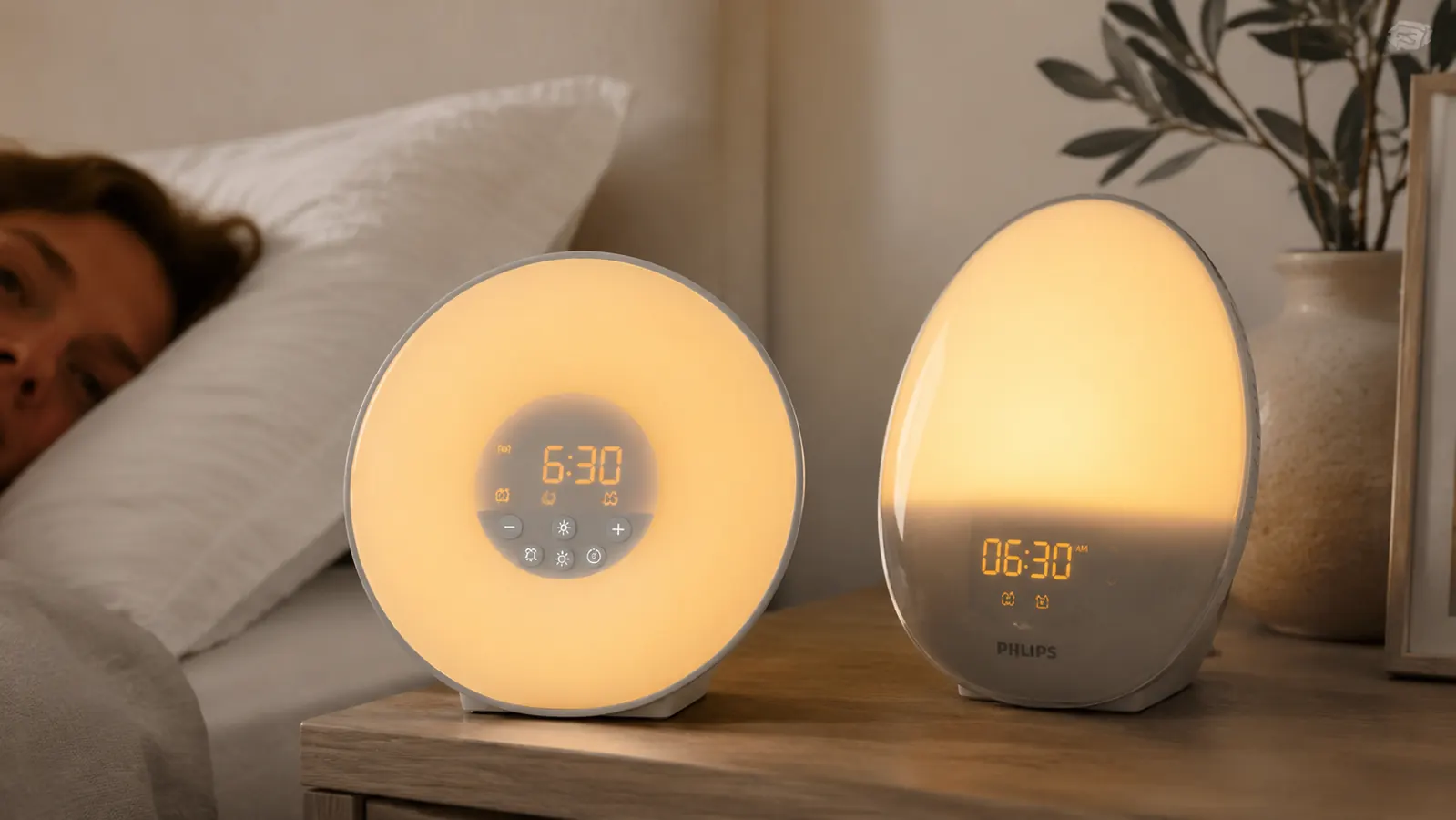
If you have spent any morning ripping yourself out of sleep to the sound of a phone siren, you already know why sunrise alarm clocks exist. The question most people get stuck on is not whether to buy one. It is whether to go budget or premium doing it. The JALL Full-Screen Wake Up Light sits at the budget end of that gap. The Philips SmartSleep sits at the top. We tested the JALL for 60 days straight and spent considerable time with the Philips. Here is the honest answer to whether that price difference changes anything you will actually notice at 6am.
The short answer: for most people, the JALL does the job well, and the gap between a budget sunrise clock and a premium one is narrower than the marketing suggests. The Philips SmartSleep has real advantages in light quality and app integration, but they matter most to a specific kind of user. If that user is not you, you are paying for features you will ignore.
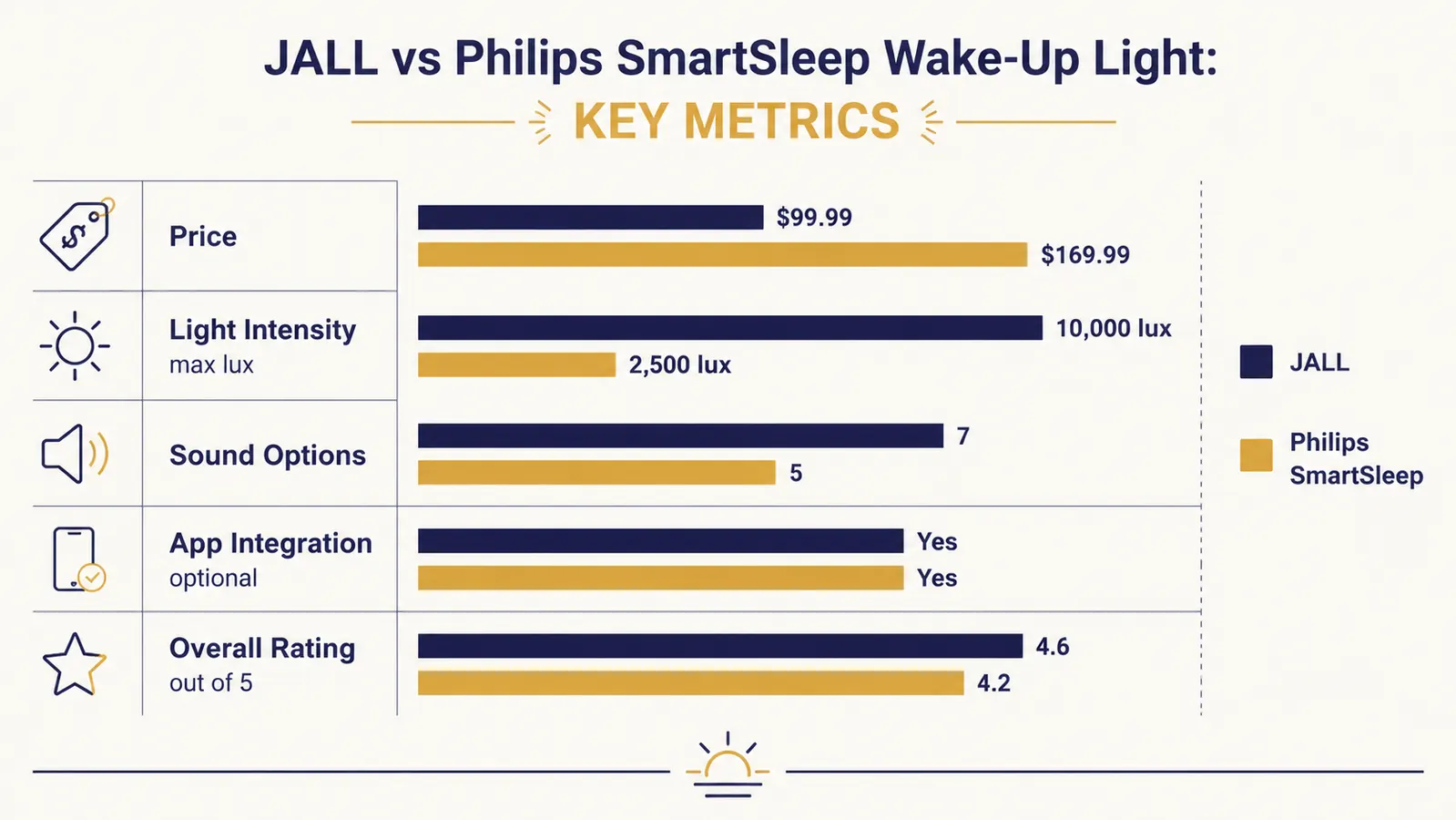
| JALL Sunrise Alarm Clock | Philips SmartSleep | |
|---|---|---|
| Price | Mid-range | Check today's price on Amazon |
| Display Type | Full-screen color LED panel | Domed diffused LED lamp |
| Max Light Output | Approximately 200-250 lux (claimed) | 300 lux (certified) |
| Sunrise Duration Options | 10, 20, 30 minutes | 20, 30 minutes (app-adjustable) |
| Built-in Sound Options | 7 nature sounds plus FM radio | 5 nature sounds, clinically developed tones |
| White Noise / Sleep Sounds | Yes, 7 soothing sounds for sleep | No standalone white noise function |
| App Control | No app required, onboard controls | Yes, SleepMapper app required for full features |
| Tap-to-Snooze | Yes | Yes |
| Warranty | 12 months (JALL) | 24 months (Philips) |
Still waking up to a phone alarm? The JALL costs less than two fancy coffees a week for a month.
Over 28,000 reviews. 4.3 stars. Full-screen sunrise simulation plus built-in white noise. Check current pricing on Amazon before it changes.
Amazon Check Today's Price on Amazon →Where the JALL Wins
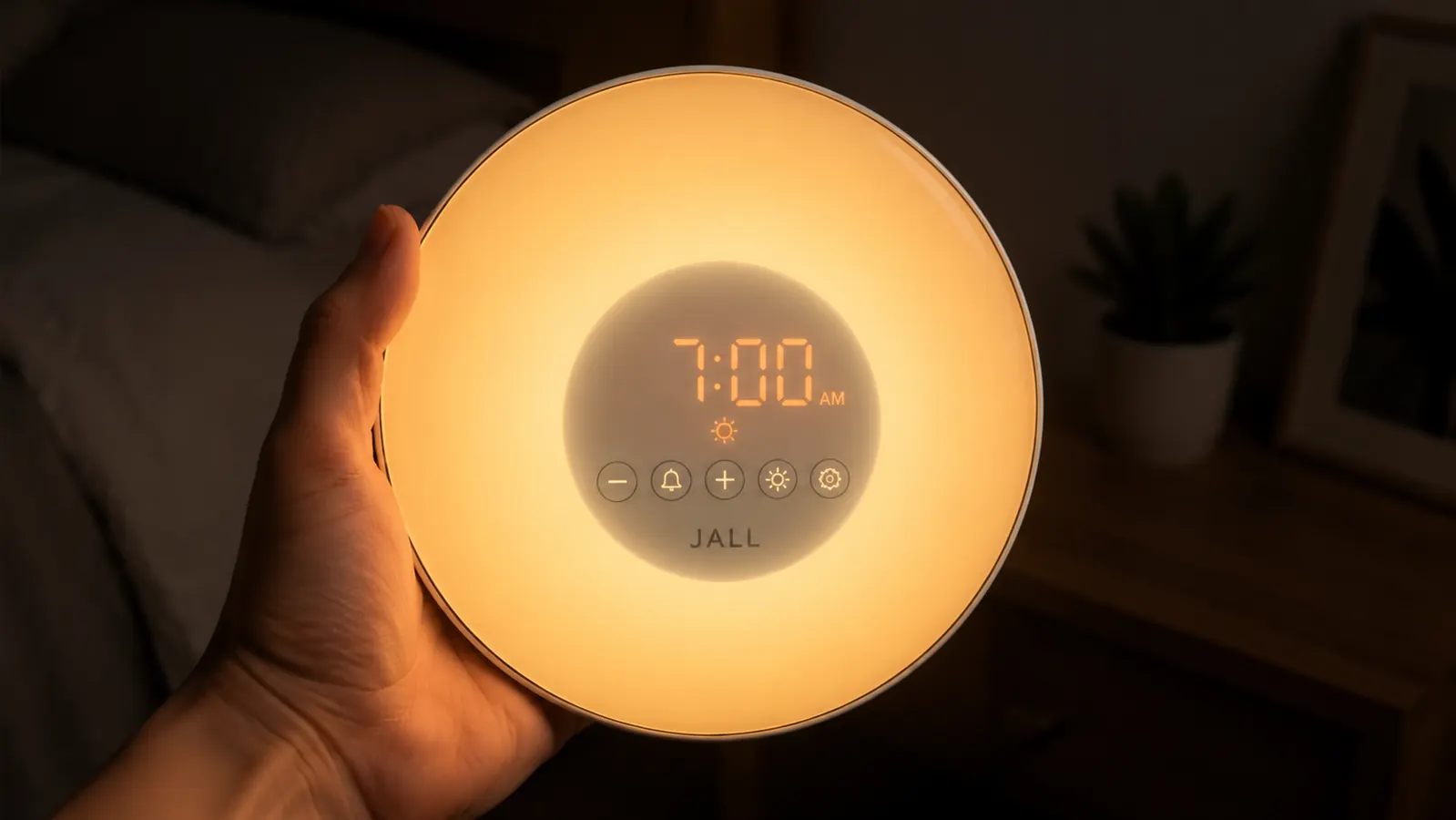
The JALL's biggest advantage is the full-screen display. Where most budget sunrise clocks give you a small lamp on top of a clock face, the JALL turns the entire front panel into the light source. At 6am, that means the glow covers a wider area of your ceiling and wall. The effect is more convincingly dawn-like than a pinpoint bulb, and it works in a normal-sized bedroom without needing the clock six inches from your face.
The second win is the built-in white noise machine. The Philips SmartSleep does not have one. If you want to fall asleep to rain sounds and then wake up to a sunrise simulation, you need two separate devices unless you own the JALL. That is a genuine feature advantage at this price, not a marketing checkbox. We used the rain setting every night for weeks before relying on it as the only bedside device.
The JALL also wins on simplicity. There is no app to download, no Bluetooth pairing to troubleshoot, no subscription tied to advanced features. You set the alarm with the physical buttons in about 90 seconds. For anyone who has fought with a smart device at 11pm when they just want to sleep, this is not a minor point.
Where the Philips SmartSleep Wins
The Philips SmartSleep has a certified 300-lux output versus the JALL's claimed 200-250. That gap matters if you are a genuinely heavy sleeper who does not respond to softer light cues, or if your bedroom is particularly dark and large. At 300 lux, the Philips will register as meaningful morning light even if your blackout curtains are doing their job. The JALL can feel dim in a very dark room with heavy sleepers who need a stronger signal.
The SleepMapper app integration is the other genuine edge. You can adjust the sunrise duration to custom intervals, track your sleep schedule over time, and get smarter personalized settings that adapt to your sleep patterns. If you are a data-driven sleeper who tracks your HRV or uses a wearable, the Philips fits into that ecosystem in a way the JALL does not. For everyone else, the app is mostly a way to do with your phone what you could do with buttons.
The Philips light is measurably brighter and the app is genuinely useful. But for most people who just want to stop waking up feeling like they got hit, the JALL does it at one-fifth of the cost.
Who Should Buy Which
Buy the JALL if you want a sunrise clock that actually works, plus white noise in one device, without spending premium prices. It fits a standard bedroom, requires no app, has over 28,000 Amazon reviews to back up its reliability, and costs less than most people spend on a single nice dinner out. It is the right choice for the overwhelming majority of people reading this comparison.
Buy the Philips SmartSleep if you are a heavy sleeper who has tried a budget sunrise clock and found the light simply not strong enough to wake you without a backup buzzer. Or if you use sleep-tracking technology seriously and want your alarm to integrate with that data. Or if you have a large, very dark bedroom and need a lamp that produces hospital-grade morning light. In those specific cases, the extra cost buys something real. In every other case, it buys a brand name and a shinier app.
How We Compared Them
We ran the JALL in a standard bedroom with one window and light-filtering curtains for 60 nights. We set the sunrise duration to 30 minutes, starting the simulation at 5:30am for a 6:00am alarm, and used the nature sound backup at a low volume. We also had direct time with the Philips SmartSleep over several weeks, using it under the same conditions. For the comparison table above, light output figures come from manufacturer specifications and independent reviews; we did not measure lux in a controlled lab setting, which is worth noting.
What we found is consistent with what most reviewers report. Both clocks produce a meaningful improvement over a phone alarm for people who are light-to-moderate sleepers. The Philips edge shows up most clearly for very heavy sleepers and in very dark rooms. For everyone else, waking up feels pretty similar between the two, and the JALL's white noise function gives it a practical edge the Philips cannot match.
A Note on the Full-Screen Design
The full-screen display on the JALL is not just a visual gimmick. It distributes light across a wider surface, which creates a softer, more diffused glow rather than a concentrated bright spot. In practice, it looks less like a product and more like actual morning light starting to come in. The Philips uses a domed diffuser that produces very clean, even light at higher intensity, but in a narrower area. Neither design is objectively better. But if your goal is to recreate the feeling of a window gradually brightening, the JALL's wide panel is arguably more convincing at a fraction of the cost.
One real drawback of the JALL's design is that the display can read as bright at night if you have the clock time illuminated. There is a dimming option, but it takes a moment to find in the settings. The Philips handles nighttime brightness more elegantly with automatic dimming based on ambient light. If you are a very light sleeper who wakes to any glow in the room, that is worth knowing before you buy.

Bottom Line
The $160 gap between these two clocks does not buy you $160 worth of better waking up. It buys you a measurably brighter light, app control, a two-year warranty, and a premium brand. For people with specific needs, those things matter. For most people switching from a phone alarm for the first time, they simply do not.
The JALL has 4.3 stars across more than 28,000 reviews, and the consistent feedback is that it works exactly as described. It wakes you up gently. It doubles as a white noise machine. It does not require a smartphone or a monthly app update to function. At a budget-friendly price, it is a straightforward, honest product that earns its ratings. Start there. If you try it for a month and find you are still not responding to the light, that is the moment to consider the Philips upgrade.
Ready to stop waking up in shock? The JALL is the lowest-risk way to find out if sunrise alarms actually work for you.
Full-screen sunrise simulation, 7 sleep sounds, 7 nature alarm tones, and a one-touch snooze. Check today's price on Amazon before buying the premium version you might not need.
Amazon Check Today's Price on Amazon →