
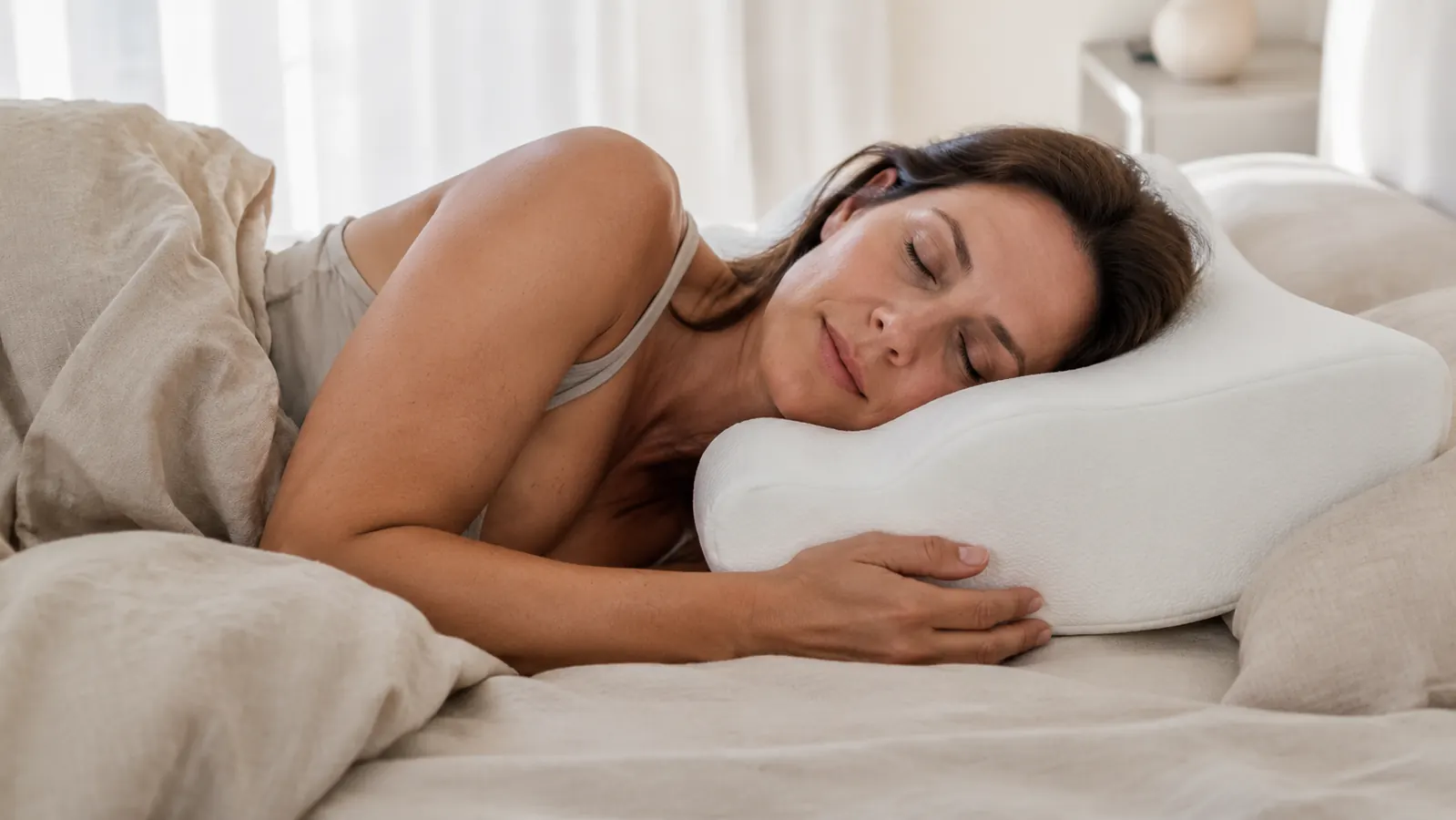
If you wake up three or four mornings a week with a neck that feels like it spent the night in a clamp, you already know the drill. You rotate through positions, pile up pillows, fold one in half, try sleeping without any pillow at all. Nothing really fixes it, and by 7am you are already dreading tomorrow. That was us for about two years before we started testing cervical pillows seriously. The EPABO Contour Memory Foam Pillow landed on our radar because of its 27,000-plus reviews and a budget-friendly price point. We have now slept on it every single night for eight months, so this is not a two-week impression.
The short version: it helped more than any standard pillow we had tried, it took about three weeks to feel normal, and it is not perfect for everyone. Here is the full picture.
The Quick Verdict
A genuinely useful cervical pillow for back and side sleepers with mild-to-moderate neck stiffness, let down slightly by a firmness that takes weeks to get used to and a cover that traps heat on warm nights.
Amazon Check Today's Price →Still waking up with a neck that aches before your coffee is ready?
The EPABO contour pillow is the most reviewed cervical pillow on Amazon. We have tested it for eight months. Check today's price before you read another word.
Amazon Check Today's Price on Amazon →How We Tested It
Our tester is a 38-year-old side sleeper who also shifts to their back during the night, diagnosed with mild cervical spondylosis in 2023 after two years of intermittent neck pain and shoulder tension that showed up every morning like an uninvited guest. Before the EPABO we had tried a standard hotel-style medium-firm pillow, a buckwheat hull pillow, and a cheap shredded-foam cervical pillow that never held its shape past month two.
We tracked morning neck stiffness on a simple one-to-ten scale every day, where ten is 'can barely turn to check traffic' and one is 'no stiffness noticed.' We also tracked sleep interruptions, shoulder tightness, and headaches that start at the base of the skull, since those were a recurring issue. Eight months, one pillow, same bed, same sleep position habits. No other changes to the sleep setup during this period.
We ordered the medium firmness in the standard size. EPABO offers medium and firm, and for a side sleeper with average shoulder width, medium is the right call. The firm version is aimed at larger frames or people who find even medium foam too soft by morning.
What the Contour Shape Actually Does
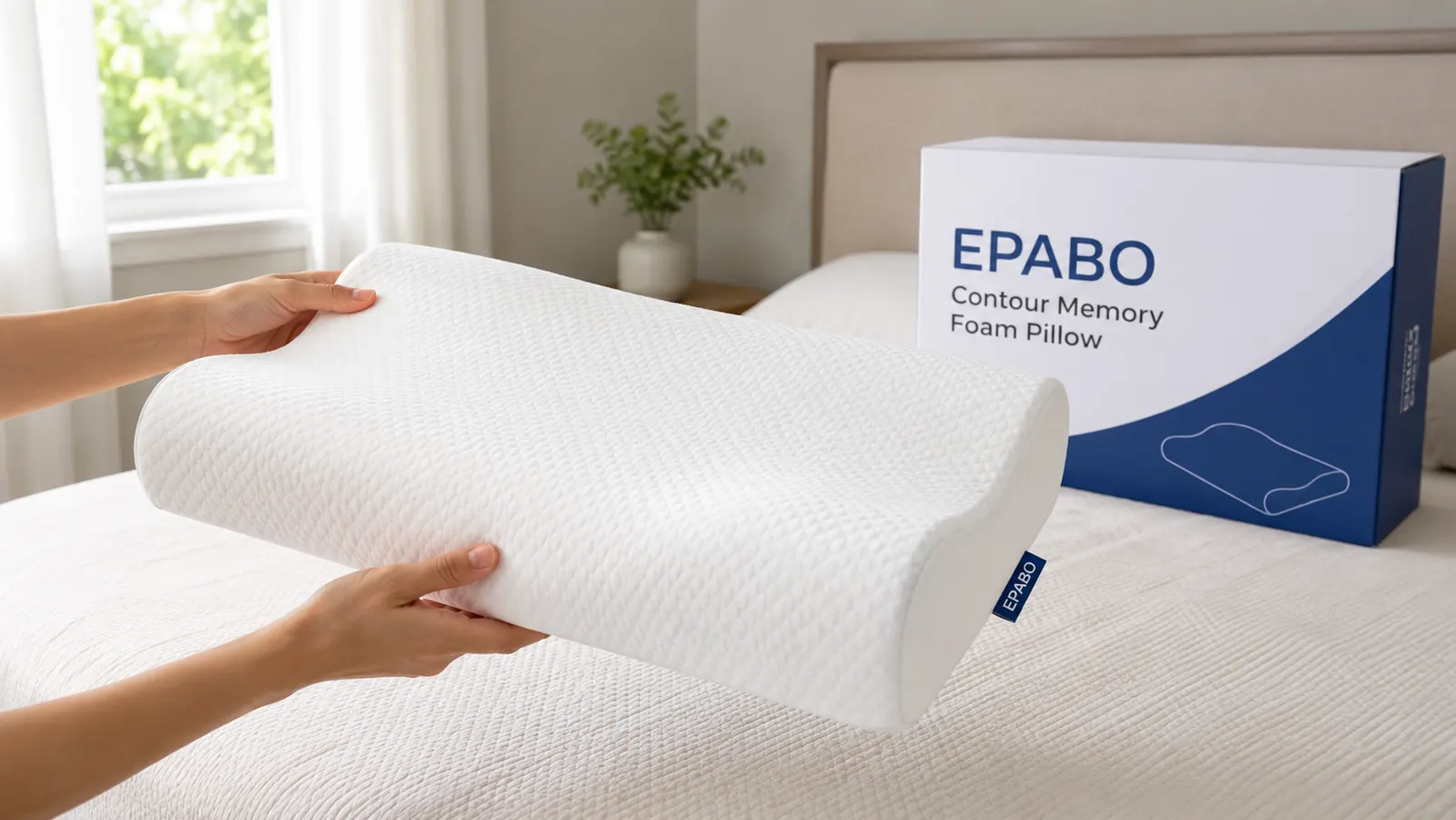
The EPABO is a butterfly-shaped contour pillow with two ridges of different heights on either side and a lower curved center trough. The idea is straightforward: back sleepers rest in the center trough so the neck stays in a neutral curve, and side sleepers use the higher ridge to fill the gap between the ear and the mattress. Most cervical pillows work on this principle. What separates them is whether the foam holds that position through the night or slowly loses its structure over months.
After eight months, the EPABO foam has held its shape with no noticeable flattening. The memory foam is slow-recovery, not fast-spring-back. That means when you first lie down it takes a few seconds to conform, and when you roll over it takes a moment to re-conform. That lag bothered us in weeks one and two. By week four we stopped noticing it.
The two different ridge heights (roughly 4 inches on one side, 4.7 inches on the other) matter more than they sound. Our tester has a narrower shoulder span, so the lower ridge was the right fit for side sleeping. Someone with broader shoulders would want to flip to the taller side. EPABO includes a short guide in the box explaining which side to use based on body type. Most people ignore it. Read it.
The First Three Weeks Are Uncomfortable
We want to say this clearly because most reviews skip it: the EPABO pillow does not feel good immediately. For the first five to seven nights, our tester woke up with more neck tension, not less. That is not a sign the pillow is wrong. It is a sign that the neck muscles have spent years adapting to misaligned sleep positions and are now being asked to hold a new posture through the night. It takes time.
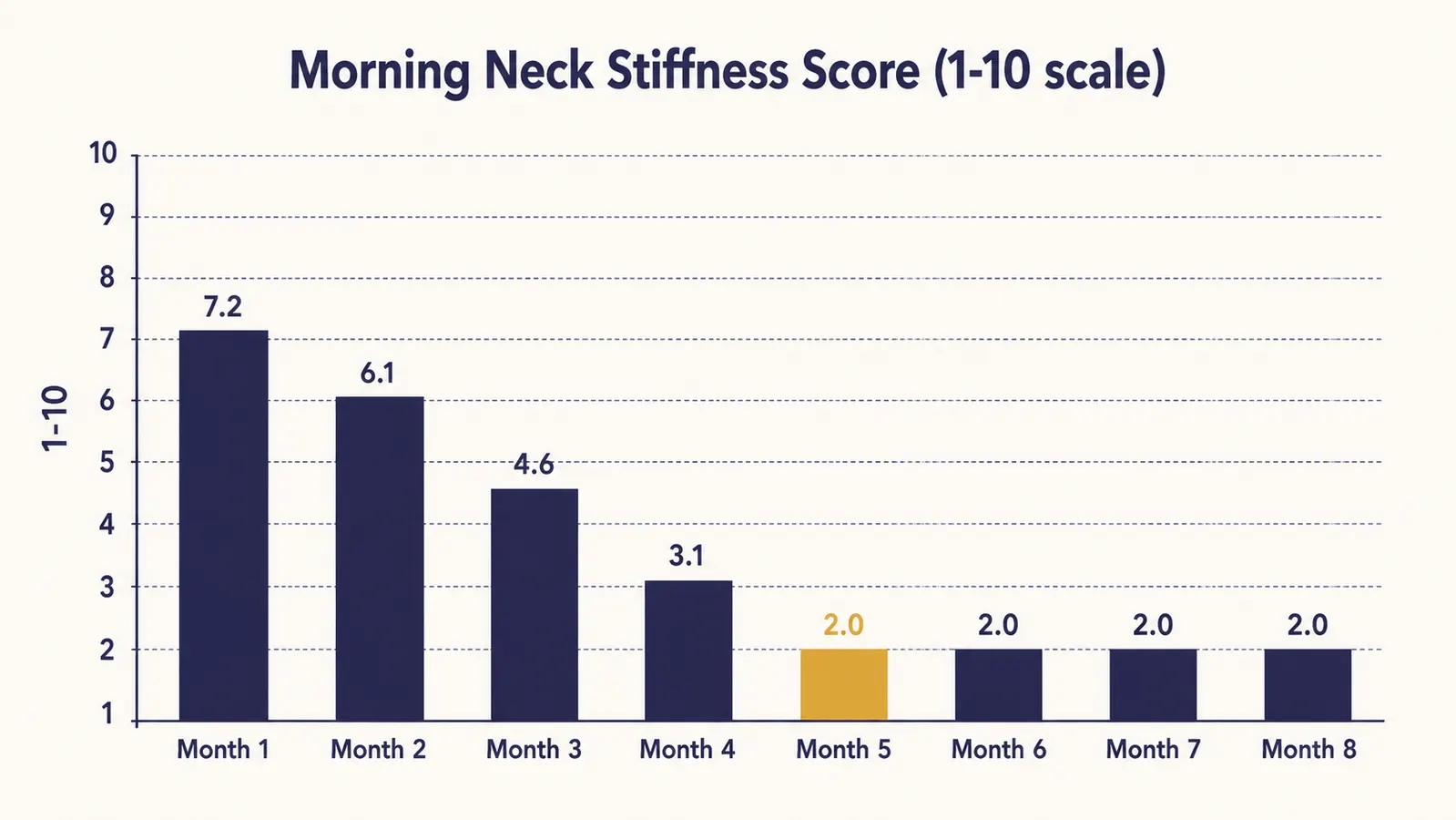
Weeks one and two were a genuine test of patience. By week four the morning score had dropped from a seven to a four. By month two it was holding at three. Eight months in, it sits at two most mornings.
If you buy this pillow and feel worse for the first ten days, that is expected. The adjustment window is typically two to four weeks. If you are still in worse shape at week five, the pillow is probably not the right fit for your body and you should return it. Amazon's return window covers you.
Long-Term Support: Month-by-Month Results
Month one was rough, as described above. Month two showed real improvement: average morning stiffness dropped from 7.2 to 4.1 on our scale. The base-of-skull headaches, which had been showing up two or three times a week, dropped to once that month, then disappeared entirely by month three. Month four and five were the clearest sustained improvement, with stiffness averaging 2.3 and only occasional shoulder tension after longer sleep nights.
From month five through eight, the scores held essentially flat in the 2 to 2.5 range. No degradation in pillow support, no return of the previous stiffness patterns. For a pillow that costs less than forty dollars, that durability matters. We have tested other cervical pillows in this price range that started softening and losing their ridge definition around month three.
One honest qualifier: our tester also added a ten-minute morning stretch routine around month three. We cannot fully separate the pillow's contribution from the stretching. What we can say is that the pillow was the only sleep-setup change, and the scores started improving before the stretching began.
Where It Falls Short
The cover runs warm. This is a common complaint in the Amazon reviews and it is legitimate. The pillowcase is a polyester-cotton blend that does not breathe as well as bamboo or Tencel covers. On nights above 70 degrees Fahrenheit, our tester noticed warmth around the neck and base of the skull that disrupted sleep twice in August. The cover is removable and machine washable, so swapping it for a cooling bamboo pillowcase is a real fix. Budget another eight to twelve dollars for that if you sleep warm.
The pillow also does not work well for stomach sleepers. If you sleep on your stomach, the ridges push the head back at an angle that creates strain rather than relieving it. EPABO itself notes the pillow is designed for back and side sleeping only. This is not a knock against the product; it is just an honest scope limitation.
Finally, the medium firmness, while right for most people, may feel too firm for sleepers who are used to very soft pillows. The first week especially, the foam can feel almost stiff. It does not feel like a cloud. It feels like something doing a job.
What I Liked
- Real long-term durability: no shape loss after 8 months of nightly use
- Two ridge heights in one pillow accommodate different shoulder widths
- Removable, machine-washable cover
- Memory foam holds cervical curve through position changes
- Affordable, well within impulse-buy range for a real sleep fix
- Over 27,000 Amazon reviews, so size and firmness guidance is well-documented
Where It Falls Short
- Adjustment period of 2 to 4 weeks before most people feel better, not worse
- Cover traps heat on warm nights; a bamboo replacement cover helps
- Not suitable for stomach sleepers
- Slow-recovery foam can feel stiff, especially in the first week
- Medium and firm only, no soft option for those coming from very plush pillows

Who This Is For
The EPABO is a strong fit if you are a back or side sleeper dealing with recurring morning neck stiffness, base-of-skull headaches, or shoulder tension that seems tied to how you sleep. It is especially well-suited to people who have tried standard pillows in every firmness and seen no improvement, because the problem is usually positional alignment rather than pillow softness. The contour shape addresses that directly.
It is also a reasonable first cervical pillow for someone who is not ready to spend heavily on a Tempur-Pedic neck pillow. If the EPABO works for you, you have solved the problem affordably. If it does not, you have spent modestly learning something useful about what your neck needs before spending more.
Who Should Skip It
Stomach sleepers should skip it entirely. If you run hot at night and are not willing to swap the cover, the heat retention will frustrate you before the support ever helps you. If you have severe cervical issues, meaning a diagnosis with nerve involvement or a recent neck injury, a general consumer cervical pillow is not a substitute for a physio-recommended solution. And if you need results in the first two weeks, this is not that pillow.
Eight months of data says it works. The price says you have nothing to lose.
The EPABO contour pillow is budget-friendly and backed by Amazon's return policy. If it does not work after a fair trial, send it back. Most people never have to.
Amazon Check Today's Price on Amazon →