

For two years I lay awake after 2am with a mind that would not stop. I tried melatonin at three different doses. I downloaded two sleep meditation apps. I bought a white noise machine and slept with the fan pointed directly at my face. None of it worked reliably, because none of it addressed the actual problem: my nervous system was stuck in high gear and nothing was telling it to stand down.
A weighted blanket fixed that. Not as a magic cure, but as a physical anchor that gave my body something to respond to. The deep-pressure sensation is not complicated science: it mimics the calming effect of being held, activating the parasympathetic nervous system the same way a firm hug does. The trick is getting the weight right, giving yourself a real break-in period, and pairing it with a routine that does not undercut the effect. I will show you exactly how I did all three.
Still picking a weight? The YnM 15lb blanket hits the 10% body weight mark for most adults between 130 and 160 lbs.
The YnM is the most-reviewed weighted blanket on Amazon, with over 49,000 ratings. It uses a seven-layer construction with cooling glass beads stitched into a grid so the weight stays even across your whole body, not pooled at the bottom. Check today's price before you read on so you have something concrete to compare.
Amazon Check Today's Price on Amazon →Step 1: Calculate the Right Weight Using the 10% Rule
The most common mistake people make with weighted blankets is guessing the weight. Too light and you feel nothing. Too heavy and you feel trapped, which is the opposite of calming for an anxious brain. The widely cited guideline is 10% of your body weight, and it holds up in practice.
If you weigh 150 lbs, a 15-pound blanket is your starting point. If you weigh 120 lbs, a 12-pound blanket. The YnM comes in sizes from 5 lbs to 25 lbs, which is one reason it suits such a wide range of people. If you are right on the border between two sizes, go lighter. A blanket that feels like a firm embrace beats one that feels like you are pinned to the mattress.
Couples sometimes want to share one blanket across a queen or king bed. That approach does not work well for anxiety relief. The whole point is that your body specifically is receiving consistent pressure. A shared blanket gets kicked around, uneven weight distribution, and neither person gets the full effect. Get individual blankets sized to each person.
Step 2: Set Up Your Blanket Correctly Before You Get In Bed
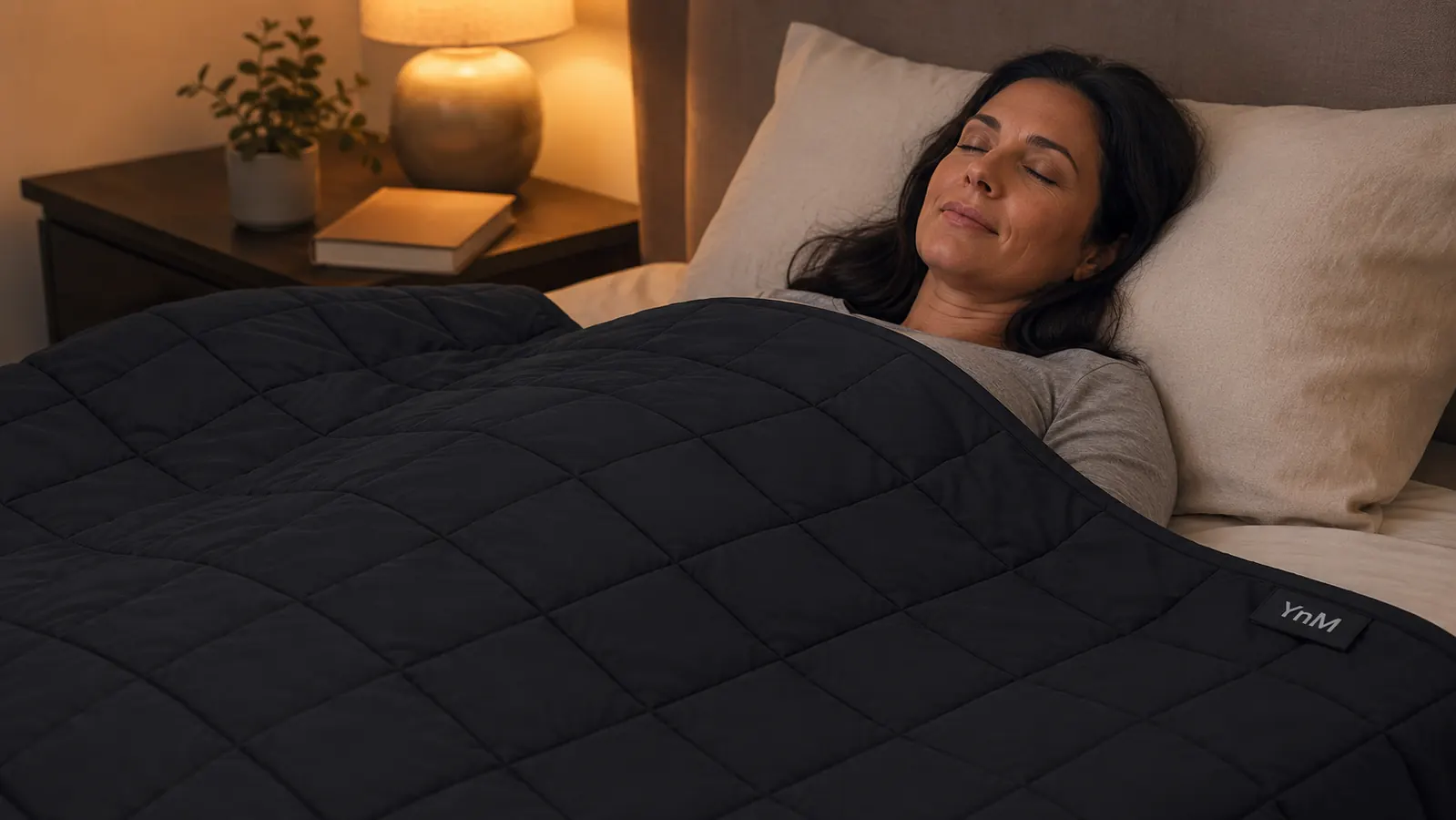
This sounds obvious but most people skip it. Lay the weighted blanket out flat across your mattress before you get in, with the heavier grid section covering the area from your feet up to your chest. You want the weight distributed across your torso and legs, not bunched at the bottom because you dragged it up in the dark.
The YnM uses a seven-layer build with glass beads sewn into small grid pockets so the weight does not shift. Even so, if you fold it in half or leave it bunched, you lose the even-distribution benefit. Take 30 seconds when you are making your bed to lay it flat. That prep step is part of the routine signal to your brain that sleep is coming.
Temperature matters here too. The YnM is not a cooling blanket by default, it is a moderate-weight cotton and polyester construction. In summer or if you run warm, swap your regular sheets to something breathable and keep the room at 67 to 68 degrees Fahrenheit. The pressure benefit does not help if you are overheating all night.
Step 3: Run a 7-Night Break-In Period
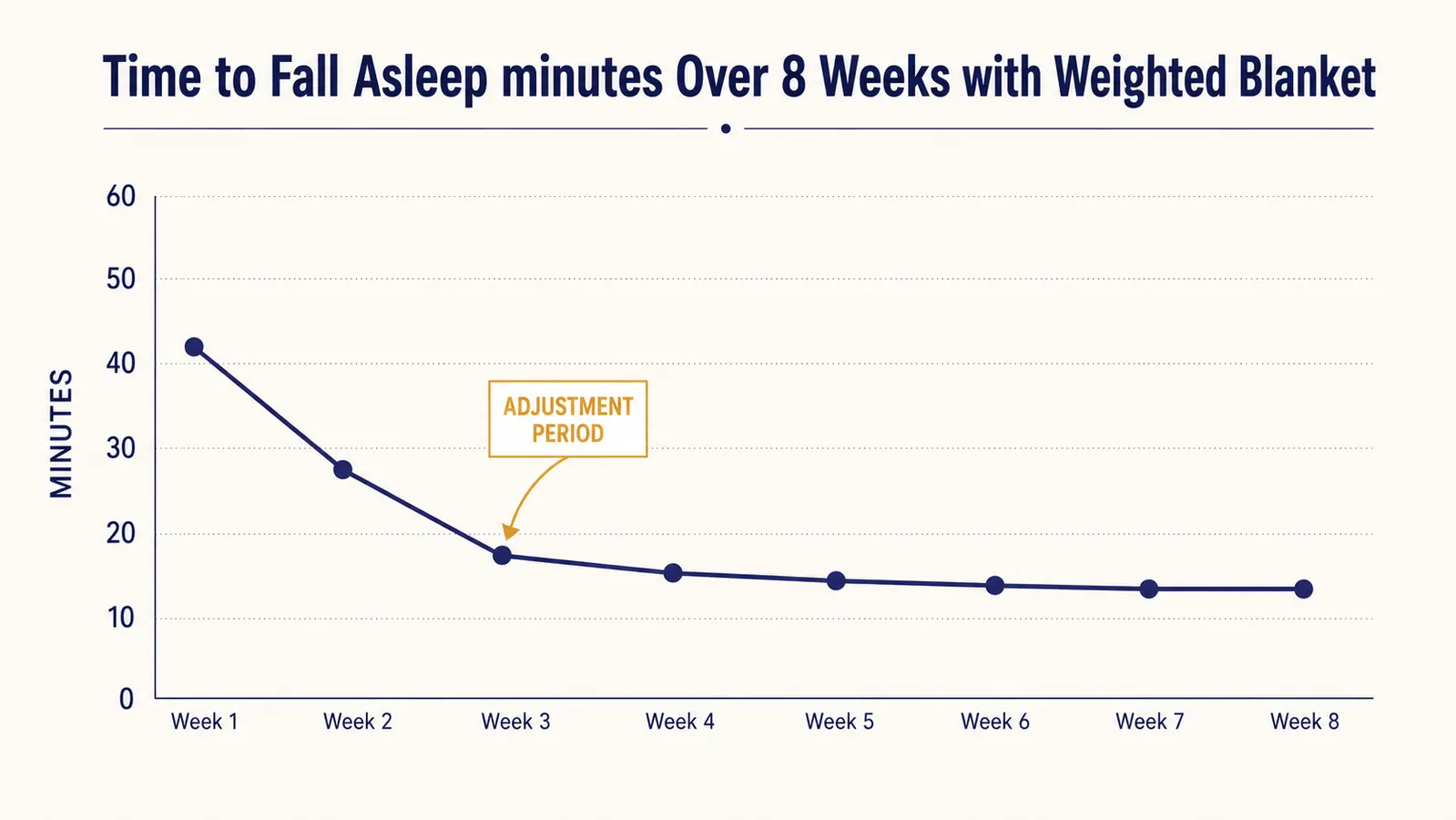
The first night under a weighted blanket is rarely the night you fall asleep faster. Most people expect an immediate effect, feel nothing dramatic on night one, and conclude the blanket does not work. That is a calibration problem, not a product problem. Your nervous system needs repetition to associate the deep pressure with safety and relaxation.
Nights one through three: use the blanket only from the time you get into bed until you fall asleep. If you wake up at 2am and feel too warm or restless, it is fine to kick it off. You are building the association, not forcing yourself to suffer under it all night.
Nights four through seven: try to keep it on for at least the first four hours of sleep. By night seven, most people notice a real difference in how quickly they settle. The pressure response is a learned calm as much as a physiological one. Give it the week.
By night four I stopped waking up in the middle of the night rehearsing tomorrow's problems. The blanket did not quiet my thoughts. It just made my body too heavy to chase them.
Step 4: Pair the Blanket With a Consistent Pre-Sleep Routine
The weighted blanket works best as the anchor of a routine, not as a standalone fix dropped onto an otherwise chaotic bedtime. If you are scrolling your phone under the blanket until midnight, you are fighting the mechanism. The light and stimulation from your screen tell your brain to stay alert. The blanket is trying to tell it the opposite. The screen wins.
What works: screens off 30 minutes before you plan to sleep, lights dimmed, and something low-stimulation in that window. Reading a physical book, stretching, journaling three things you are done thinking about for the night. When you get under the blanket, that transition becomes a cue. Your brain starts learning that blanket means sleep is close.
Keep the routine consistent for two weeks. Consistency is what converts the blanket from a novel sensation to a reliable physiological trigger. The anxiety does not disappear overnight, but the window between getting into bed and actually falling asleep shrinks. For most people with nighttime anxiety that window had been anywhere from 45 minutes to two hours. After two weeks with a consistent routine and the right-weight blanket, it drops to 15 to 20 minutes.

Step 5: Troubleshoot What Is Not Working
The blanket feels claustrophobic. This almost always means the blanket is too heavy. Drop down one size. A 15-pound blanket feeling like a restraint means you need a 12-pound one. Claustrophobia under pressure is a panic signal, the opposite of what you want. There is no virtue in pushing through it.
You are waking up overheated at 2am. The blanket is not the problem, your room temperature or base layer is. Try lowering the thermostat two degrees, switching to a moisture-wicking sheet set underneath, and wearing lighter pajamas. The YnM breathes reasonably well for a multi-layer blanket but it is not designed for hot climates without some environmental adjustment.
The anxiety is still bad after two weeks. A weighted blanket addresses the physical component of nighttime anxiety: the hyperarousal, the inability to settle the body. It does not treat clinical anxiety disorder. If your anxiety is severe and pervasive, talk to a doctor. The blanket can be one tool in a larger approach. It should not be the only one.
What Else Helps
The weighted blanket works on the body. There are a few other things worth stacking with it to handle the mental side of nighttime anxiety. Keeping a notepad next to the bed for a quick brain dump before you get under the blanket takes the to-do list off your mental loop. Writing down three specific worries and one action you will take tomorrow on each one is a 10-minute habit that cuts the 2am rehash in half for most people.
Magnesium glycinate taken 30 to 60 minutes before bed has solid evidence behind it for relaxation and sleep quality. It does not sedate you, it just removes a common physiological deficit that makes the nervous system harder to downshift. Pairing it with a weighted blanket and a dark, cool room is about as clean a setup as you can build without a prescription. Check with your doctor if you are on medications, but for most adults it is a low-risk addition.
A white noise machine running in the background handles the environmental interruptions: a car outside, a neighbor's TV, the house settling. The YnM weighted blanket addresses the internal signal. White noise addresses the external one. They work on different inputs and combine well. If you find yourself waking to sounds even when you are not anxious, adding a sound machine is worth it. See our comparison of the 10 reasons a weighted blanket improves sleep for anxious adults for more context on the full mechanism, and check the YnM long-term review if you want six months of real-world data before you buy.
You have got the steps. Tonight is a reasonable night to try this.
The YnM 15lb weighted blanket is the most-reviewed option in this category on Amazon, with a 4.6-star rating from over 49,000 buyers. It ships fast, washes in a standard large-capacity machine, and the sizing range means most adults can find their correct weight in the same product line. Check today's price and see if it is the right fit for where you are starting.
Amazon Check Today's Price on Amazon →