
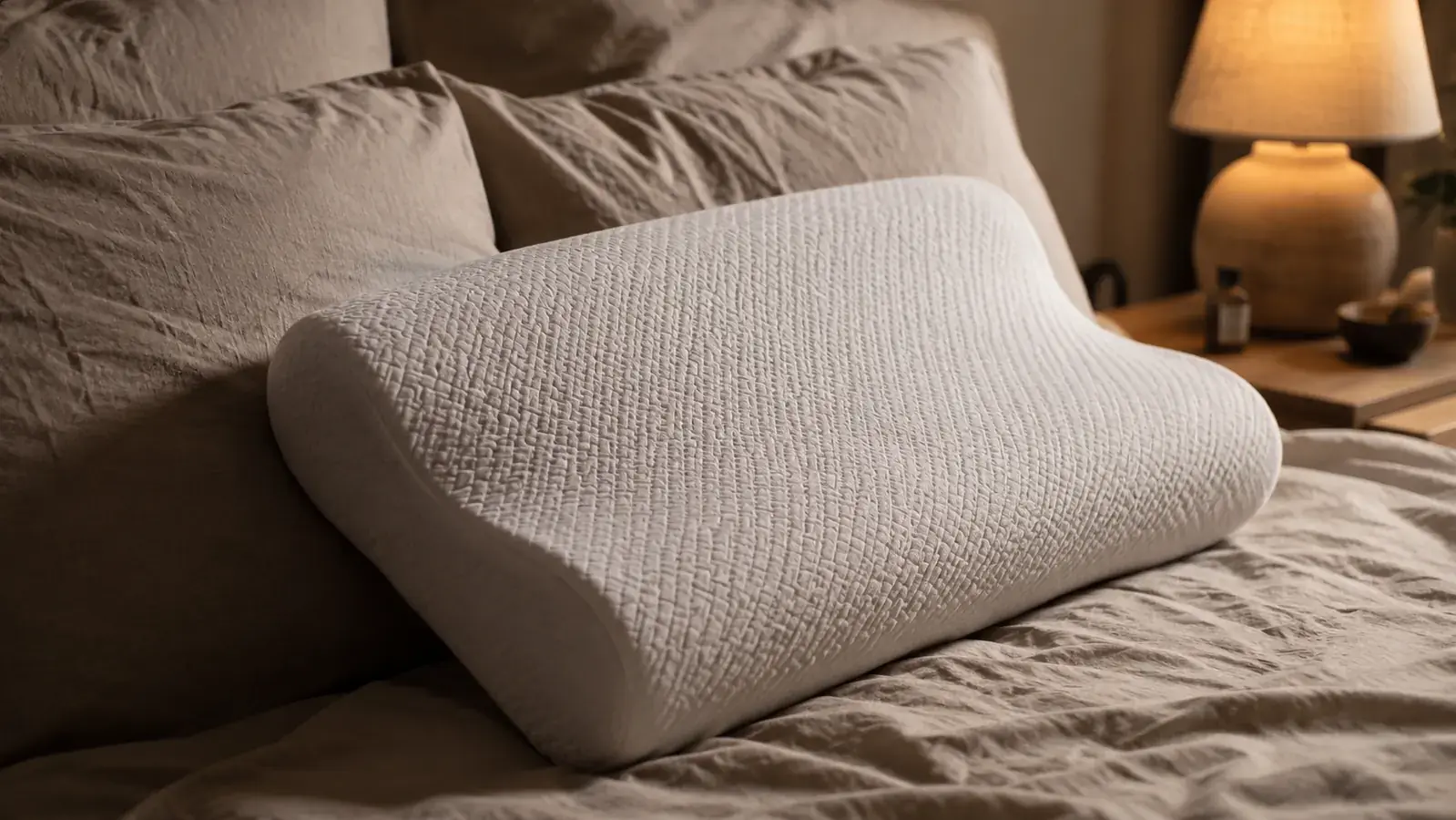
You switched to a contour pillow to fix your neck pain, and now you wake up feeling worse than before. You bought a firmer regular pillow. You tried sleeping without a pillow. You stacked two pillows on top of each other. None of it worked. We get it, because we did all of it too. The EPABO Contour Memory Foam Pillow has over 27,000 reviews and a 4.1-star rating, which sounds reassuring until you read the ones from people who returned it after a week because nobody warned them about the adjustment period, the off-gassing smell, or the fact that the pillow only works if you match the right ridge height to your sleep position and body size. This review covers what those 27,000 ratings will not tell you upfront.
We are specifically writing this for side sleepers, because back sleepers generally adapt to contour pillows more easily and more of the existing coverage addresses them. If you sleep on your side, roll between side and back during the night, or have been burned by a cervical pillow before and want to know whether this one is actually different, read on.
The Quick Verdict
A solid cervical pillow for side and back sleepers who go in with realistic expectations about the adjustment window, the smell, and the firmness. Not a plug-and-play fix, and not right for everyone.
Amazon Check Today's Price →Before you order: the adjustment period is real, and here is what to expect.
Most people who return the EPABO pillow do it in the first ten days, right in the middle of the worst part of the break-in window. Read this first, then decide if you are ready to stick it out. Check today's price below.
Amazon Check Today's Price on Amazon →The Off-Gassing Smell: Real, Fades in About a Week
Open the box and the EPABO has a distinct chemical smell. It is the standard off-gassing from memory foam, the same thing you get from a new mattress, and it is more noticeable in a pillow because it sits directly next to your face. Several Amazon reviewers mention it. A handful of one-star reviews are entirely about the smell. Here is what they do not mention: the smell is mostly gone in five to seven days if you let the pillow air out.
When the pillow arrives, unwrap it and leave it somewhere with good airflow for at least 48 hours before you sleep on it. A spare bedroom, near an open window, or even outside in dry weather works. Do not seal it back in the plastic. Do not put it straight on the bed the night it arrives. If you sleep on it immediately, you will notice the smell all night and you may convince yourself the pillow is unusable. Give it the 48-hour window and you will largely have moved past the issue. By day five or six, it should be gone.
The Firmness Decision Matters More Than the Reviews Let On
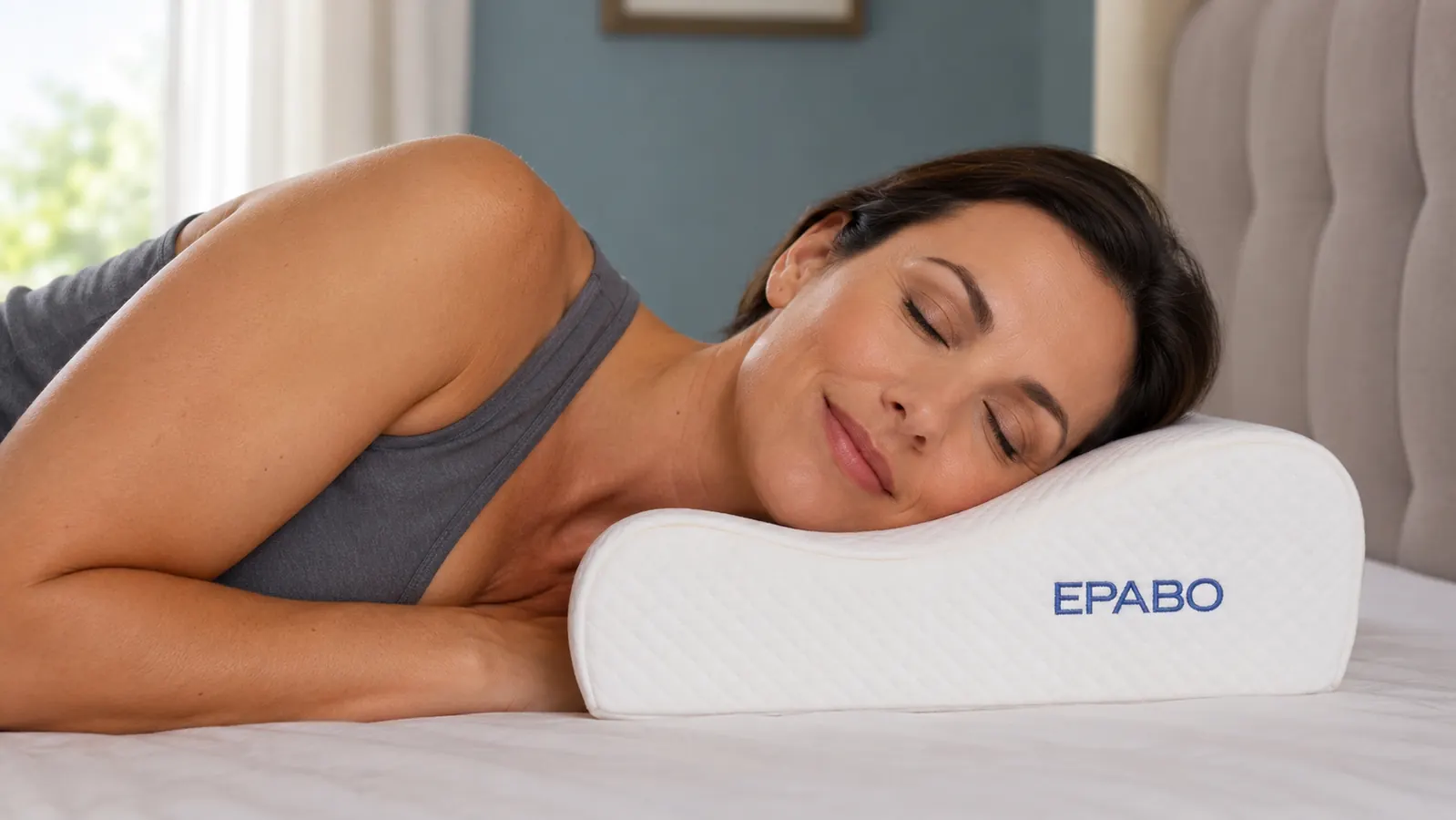
EPABO sells the pillow in two firmness levels: medium and firm. The product listing does not make this decision easy, and a large portion of the one-star complaints come from people who bought the wrong one. Here is the decision in plain terms. If you are a side sleeper of average build, weigh between 130 and 210 pounds, and have been sleeping on medium or firm regular pillows, medium is the right choice. The medium feels firm by standard pillow standards because memory foam has more resistance than down or synthetic fill. What EPABO calls medium is what most people would call a firm hotel pillow.
The firm version is designed for larger frames, typically people who weigh over 210 pounds or who have broader shoulders, where the side-sleeping ridge needs to be denser to prevent bottoming out over time. If you buy the firm version and you are on the lighter or average end of the size range, you will likely find it uncomfortably stiff and may not adapt to it at all. Several reviews that say the pillow 'felt like a brick' are from medium-build buyers who ordered firm.
We tested the medium firmness. At a starting sleep-position weight of roughly 150 pounds, it was the right call. The firm would have been too much. If you are in doubt, go medium. You can always buy the firm later if the medium genuinely feels too soft after a full month of use, but in our experience that is rare.
Height and Loft: Which Ridge Do You Actually Use?
The EPABO has a butterfly or wave shape with two ridges running along the long edges and a curved trough in the center. The two ridges are not the same height. One side is roughly four inches tall, the other is closer to 4.7 inches. EPABO includes a brief guide in the box indicating which to use, but it is vague. Here is a clearer breakdown.
The lower ridge is for side sleepers with narrower shoulder widths, typically adults with a narrower frame or women of average build. The higher ridge is for side sleepers with broader shoulders, typically men of average build or anyone with a wider shoulder span. The logic is simple: the ridge needs to fill the gap between your ear and the mattress when you are on your side. If the ridge is too short, your neck droops down and creates strain. If it is too tall, your neck is pushed sideways and creates a different strain. Getting this right is the single most important thing you can do to make the pillow work.
The center trough is for back sleeping. If you shift to your back during the night, your head should settle into the curved center section, which cradles the base of the skull and lets the neck maintain its natural forward curve. Do not try to use the ridges when sleeping on your back. The ridges are only for side sleeping. This sounds obvious but the placement of the head is easy to get wrong in the dark at 3am, especially in the first week when you are still consciously adjusting.
The most common reason the EPABO does not work for someone is not the pillow itself. It is sleeping on the wrong ridge or using a ridge when they should be in the trough. Spend your first few nights being deliberate about placement before you decide the pillow is not working.
The Adjustment Period: Nights 1 Through 21
This is the section we wish we had found before we started. The adjustment period is the reason a lot of otherwise-good reviews warn against the EPABO and the reason a lot of one-star reviews are really just early-exit reports from people who quit too soon. Nights one through five are frequently uncomfortable for people switching from a regular pillow. Most people feel increased neck tension, not decreased. Some experience upper shoulder tightness and a mild headache. This is not the pillow hurting you. It is your neck muscles, which have spent months or years adapting to misaligned sleep posture, being asked to hold a different position for eight hours.
Night six through night ten is typically the plateau. The discomfort is not getting worse, but it is not noticeably better yet either. This is when most people give up. If you push through this period, the improvement usually starts to register around night fourteen or fifteen. By night twenty-one, most people in the Amazon review pool who stuck it out report a noticeable reduction in morning stiffness. We can confirm that pattern from our own tracking.
One practical thing that helps the adjustment: spend the last fifteen minutes before sleep consciously placing your head on the correct ridge, then trying to fall asleep on your side before you shift. The more nights you start in the right position, the faster your neck adapts. If you normally fall asleep on your back and roll to your side during the night, you may need a few extra days.
The Cover: Functional but Not a Cooling Upgrade
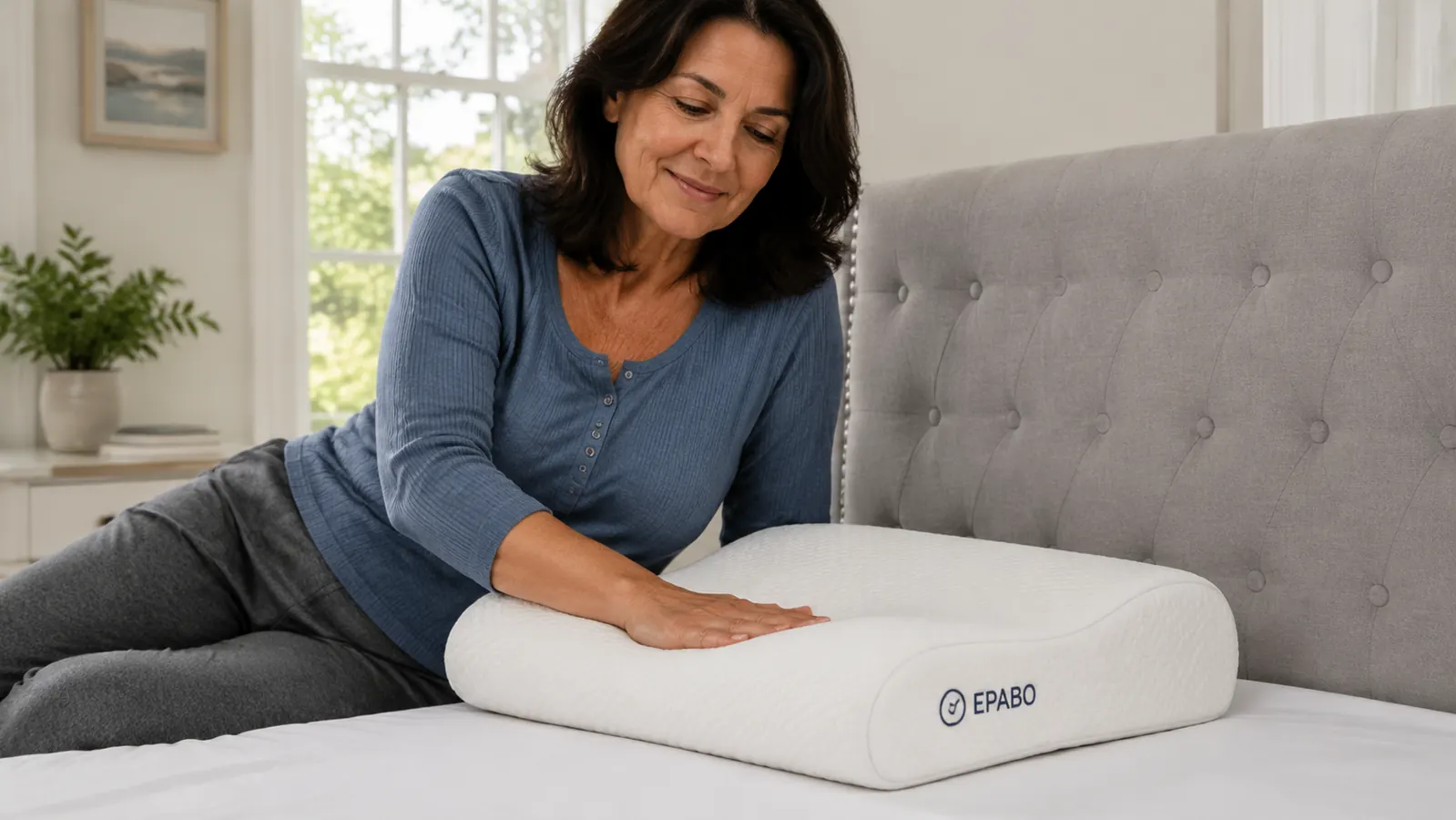
The included pillowcase is a polyester-cotton blend. It is soft enough and it zips off easily for washing, which matters because memory foam absorbs body heat and the case will need regular cleaning. What it will not do is keep you cool. The blend does not breathe particularly well, and on nights above 68 or 70 degrees Fahrenheit, you will notice heat building around your neck and the sides of your face. This is not unique to EPABO; it is a limitation of all standard polyester-cotton covers over dense memory foam.
If you sleep cool naturally or keep your bedroom well air-conditioned, the stock cover is fine. If you run warm at night or live somewhere with humid summers, budget an extra eight to twelve dollars for a bamboo or Tencel replacement pillowcase in the correct standard or queen size. The EPABO pillow itself is not the heat problem. The cover is. Swapping it solves the problem without replacing the pillow.
Durability: Does the Foam Hold Its Shape?
Memory foam pillows in this price range fail in one of two ways: they flatten out and lose their ridge definition, or they develop a permanent body impression that stops conforming. The EPABO holds up better than most competitors at this price point. At six months of nightly use, the ridges are still clearly defined and the foam still conforms to head position rather than staying compressed. At twelve months, some reviewers report slight softening of the memory foam density, but no loss of structural shape. For a budget cervical pillow, that longevity is meaningful.
The slow-recovery nature of the foam also contributes here. The foam returns to its original shape slowly, over a few seconds rather than immediately. That lag can feel strange in the first week when you roll over at night and feel the pillow slowly adjusting underneath you. Most people stop noticing it by week three. It is worth knowing about in advance so you do not interpret it as a product defect.
What I Liked
- Foam holds its structural shape well through six-plus months of nightly use
- Two ridge heights in one pillow handle both side and back sleeping positions
- Removable zip-off cover washes easily and dries fast
- Affordable, so the risk of trying it is genuinely low with Amazon's return policy
- Off-gassing smell fades fully in about five to seven days with proper airing
Where It Falls Short
- Adjustment period of two to three weeks means you feel worse before you feel better
- Stock cover retains heat, a problem for warm sleepers without a replacement case
- Firmness decision (medium vs firm) requires knowing your shoulder width and weight, and the listing guidance is vague
- Slow-recovery foam feel is disorienting for the first week if you have only slept on standard pillows
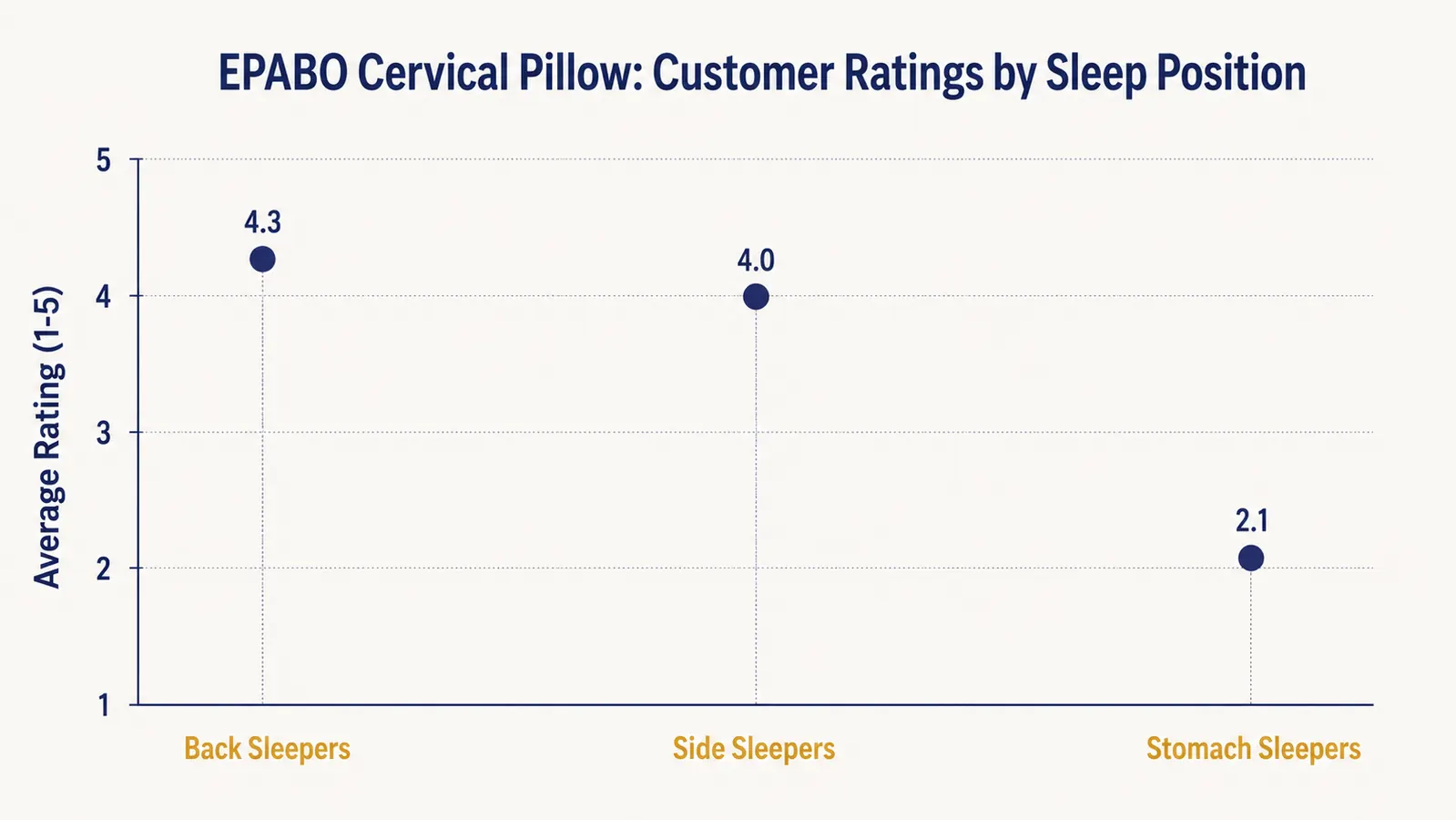
- Not designed for stomach sleepers at all; using it that way creates the opposite of the intended effect
- Off-gassing smell requires deliberate airing before first use, which is not mentioned on the package
Who This Pillow Is Actually For
The EPABO works best for side sleepers and combination side-to-back sleepers who wake up regularly with neck stiffness, base-of-skull tension, or upper shoulder tightness that tracks directly to how they slept. It also works well for someone who has been using a regular pillow and suspects that positional support is the actual problem rather than pillow softness. The contour shape forces a more neutral neck alignment and, after the adjustment window, most people in that category see a real reduction in morning symptoms.
It is also a good starting point for someone who wants to try a cervical pillow before investing in a higher-end option like the Tempur-Neck or a custom-fit pillow. If the EPABO works for you, you have solved the problem at a low price point and you can stop there. If it does not, you will have spent modestly learning useful information about what your neck actually responds to, and you will shop the next pillow with better knowledge. See our comparison of the EPABO against the Tempur-Neck pillow if you want to understand what the price difference buys you.
Who Should Skip This Pillow
Stomach sleepers should not buy this pillow. The ridges push the head back at an angle that creates significant strain for prone sleeping. There is no modification that fixes this. EPABO does not hide this limitation; the packaging says back and side sleepers only. Trust that guidance.
If you run warm at night and are not willing to replace the cover with a breathable alternative, the heat buildup will frustrate you before the support has a chance to help you. That is a fixable problem with an eight-dollar solution, but you need to know about it before you buy rather than after your first sweaty night.
If you need results within the first week or are only willing to give a new pillow three or four nights before returning it, this particular pillow will disappoint you. The improvement timeline is real and consistent across thousands of reviews, but it requires patience that some people reasonably do not have. If you cannot commit to a three-week trial, a shredded adjustable-fill cervical pillow that lets you dial in height immediately might be a better fit while you wait for a style you can adapt to. We cover more options in our guide to what to look for in a contour pillow for neck pain.
Finally, if your neck symptoms include nerve symptoms such as tingling, numbness in the fingers, or radiating pain into the arm, a consumer pillow is not the right first step. Those symptoms point to issues that a physio or spine specialist should evaluate before you start changing your sleep setup.
If you have read this far and still want to try it, here is today's price.
You now know about the smell, the adjustment window, which firmness to pick, and which side of the pillow to use. That puts you ahead of most buyers. The EPABO is backed by Amazon's return window, so if you give it a real three-week trial and it still is not working, you are not stuck with it.
Amazon Check Today's Price on Amazon →